

EU Unveils New Migration Action Plan: What Ghanaian Travelers and Applicants Need to Know
October 7, 2026
News · October 4, 2026
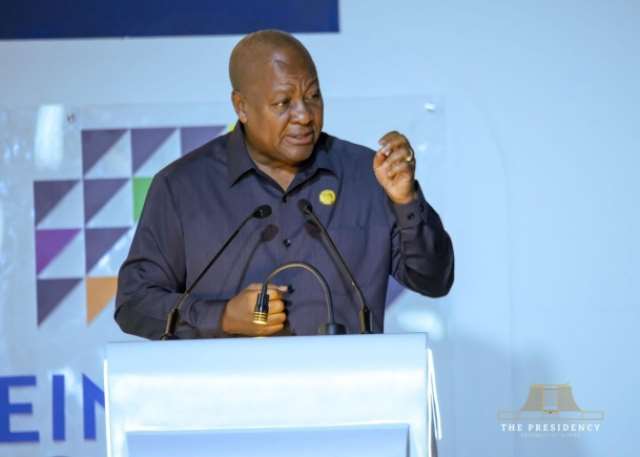
Speaking at the Alamein Africa Forum in Egypt, President Mahama called for a shift in health financing, urging leaders to view local healthcare and pharmaceutical manufacturing as high-growth economic investments
President John Mahama has called for a major rethink of healthcare financing across Africa, urging governments and global investors to treat the healthcare sector as an economic investment rather than a social expense.
Addressing the Health Plenary at the Alamein Africa Forum in Egypt, President Mahama argued that expanding healthcare financing drives economic growth, creates jobs, builds human capital, and supports macroeconomic stability. He highlighted a systemic flaw in budgetary planning across the continent, stating, "African finance ministers and global investors have made a fundamental error.
They have treated health as a line-item cost and a social expenditure in their budgets to be funded only when there is money left over."Urging stakeholders to pivot away from this approach, Mahama emphasized, "Health is not a charitable cost. It is an investable high-growth economic sector. It drives human capital, manufacturing, job creation, and macroeconomic stability." To reinforce his stance, he referenced research by the Copenhagen Consensus, showing that a targeted basic maternal and emergency care package yields $87 in economic returns per dollar spent.
He also cited the Lancet Commission, noting that reduced mortality rates accounted for nearly a quarter of total income growth in developing nations during the early 2000s. "Investing in healthcare strengthens our balance sheets rather than depleting resources," he added.
Focusing on Africa's pharmaceutical gap, Mahama raised alarms over the continent's reliance on foreign production, noting that Africa imports over 70% of its pharmaceuticals and nearly 99% of its vaccines. With OECD projections forecasting a 29% to 46% decline in foreign health aid compared to 2024 levels, he stressed that African nations must mobilize domestic private capital to finance local drug manufacturing.
He concluded that Africa's population—projected to hit 2.5 billion by 2050—presents a massive market opportunity for domestic investors to position pharmaceutical manufacturing as a strategic sector, retaining economic value and securing health sovereignty.
Be the first to comment.